
Sendible Alternative for Agencies: How to Choose
Sendible prices by workspace and profiles. A guide to when an agency should switch, what migration costs, and where Maxbound honestly fits.
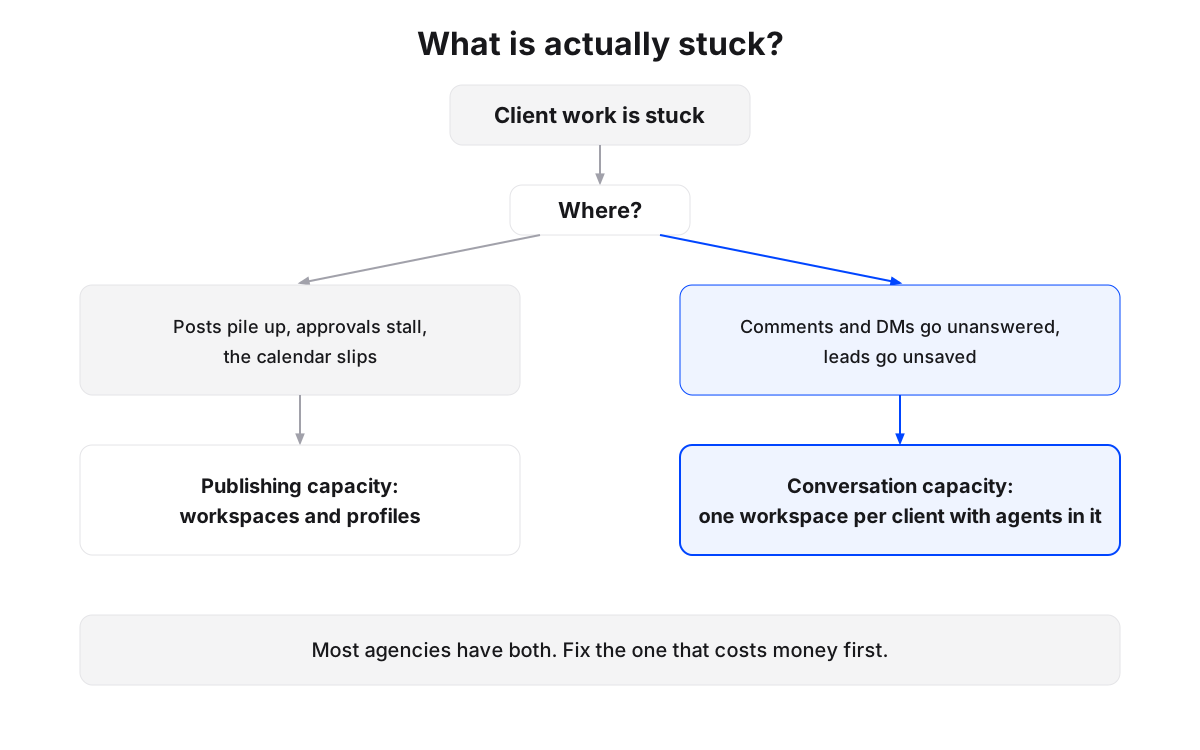
An agency shopping for a Sendible alternative should decide first which half of the work it is buying software for. Sendible is priced by publishing capacity, in workspaces and social profiles, so it suits an agency whose bottleneck is getting client posts approved and out the door. Maxbound is priced per client workspace and puts agents on the conversations inside that workspace, so it suits an agency whose bottleneck is comments and DMs that land after hours and never become leads. Neither one is the cheap answer to the other’s problem.
| Dimension | Sendible | Maxbound |
|---|---|---|
| Priced on | Workspaces and social profiles | Client workspaces, AI credits included |
| Entry price | $35/mo for 1 workspace, 6 profiles | Per workspace; 7-day free trial, no free plan |
| Annual billing | About 15% off | Not published as a percentage |
| What one client gets | A workspace inside the account | Its own workspace: channels, knowledge, contacts, agents, posts |
| Who answers a 9pm DM | Your team | Agents answer, qualify, and hand a person the full history |
| Where the lead lands | Not stated in the sources used here | Built-in CRM, saved from the conversation |
| Approval before anything sends | Not stated in the sources used here | Stays on until an agency turns it off |
| Conversation channels | Not stated in the sources used here | WhatsApp, Instagram, Facebook, website chat, in-app chat |
What Sendible is
Sendible’s plans are counted in workspaces and profiles. Core is $35 a month for one workspace and six profiles, Plus is $99 for three workspaces and 18 profiles, Premium is $199 for seven and 42, Elite is $299 for 15 and 90, and Enterprise is $750 for 50 workspaces and 300 profiles, with roughly 15% off for annual billing, according to Cloud Campaign.
Read that ladder and you can see what Sendible thinks it is selling: capacity to hold a lot of client accounts and publish into them. If your week disappears into approvals and scheduling across a dozen clients, that is the shape you want to buy.
What Maxbound is
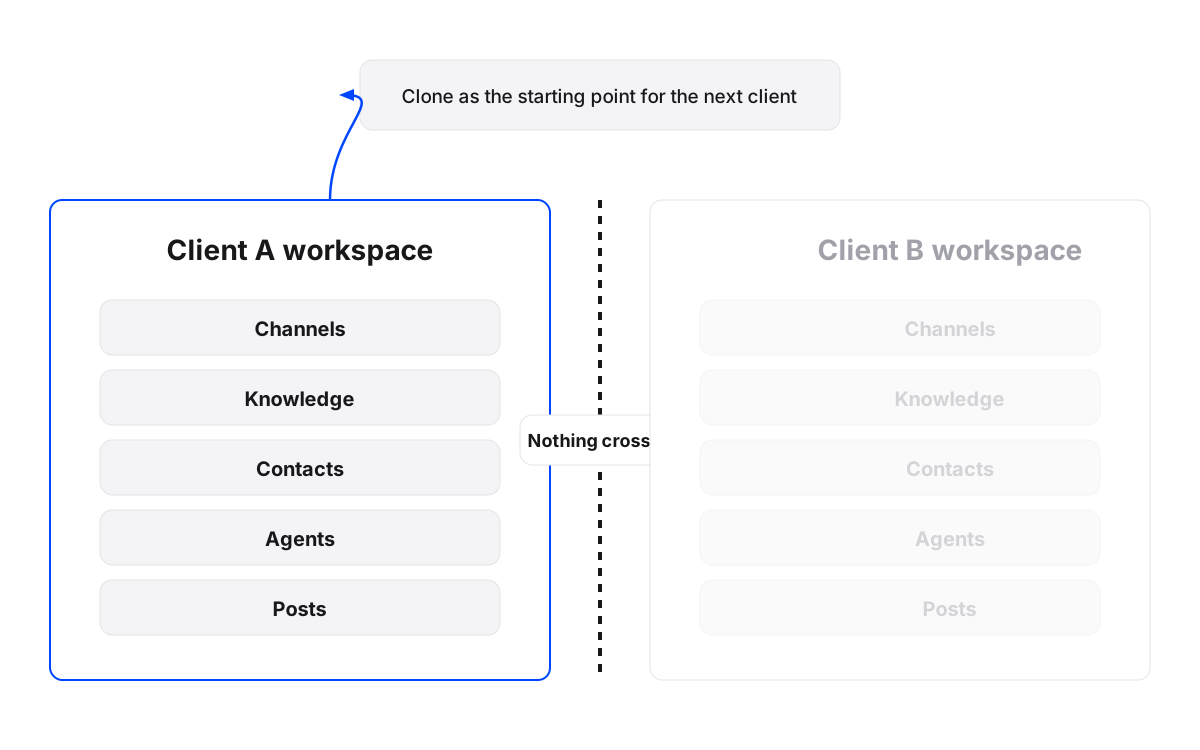
Maxbound is an AI operating system for agencies. Every client gets a workspace with its own channels, knowledge, contacts, agents and posts, and nothing crosses between workspaces. A workspace that works can be cloned as the starting point for the next client.
Work is briefed in plain language, the way you would brief a new hire, inside Maxbound or from Claude, ChatGPT or Codex through the MCP server. The agent asks what it needs to know, builds the agent, the automation or the schedule inside that client’s workspace, and nothing goes live until someone at the agency approves it.
That approval gate is a setting, not a phase. It can stay on for as long as you want, which matters when a client’s marketing lead wants to read every reply before it sends. An agency that has to run every client from one place feels the workspace boundary immediately: one client’s contacts never surface in another client’s inbox.
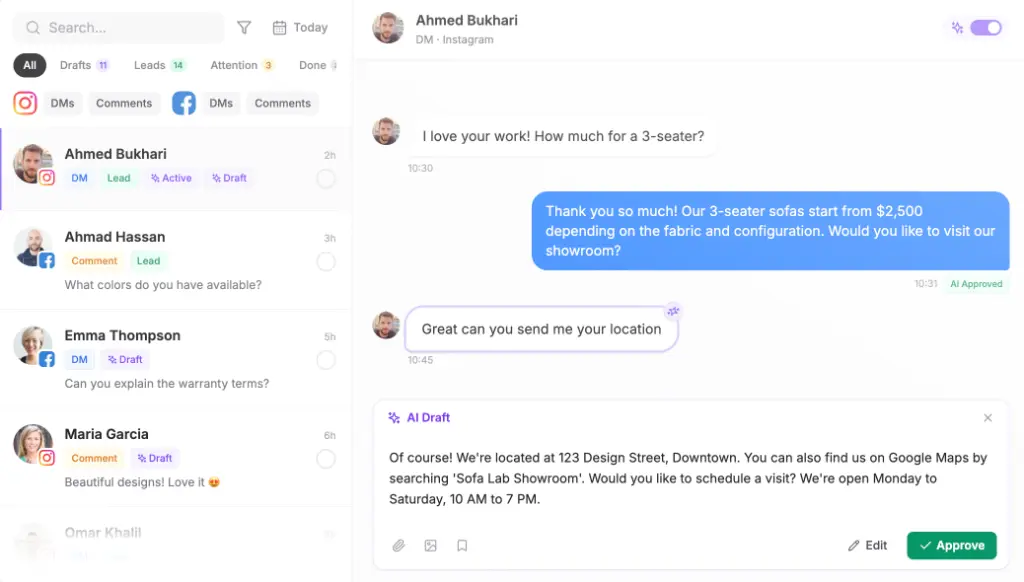
An agent can also draft a reply for a person to approve or edit rather than send it. That is the mode most agencies start in.
Where Sendible is the better choice
I am not going to pretend there isn’t one. Four cases where Sendible is the right buy.
Your profile count is small and the inboxes are quiet. $35 a month for six profiles is a low floor. Maxbound prices from the first workspace and there is no free plan, so a two-client agency with a trickle of messages spends more for capability it isn’t using.
Clients buy publishing, not conversation. Plenty of retainers are calendar, captions, approvals and a monthly report. If nobody’s DMs are a business problem, an agent answering them solves a problem your client doesn’t have.
You want a person on every reply, permanently. Maxbound will hold every reply as a draft for a human, and some agencies run it that way for good. But you would be paying for agent work you have switched off.
Set-up time is the scarce thing this month. An agent is only as good as what it is trained on: the client’s website, files, FAQs and past chats. That is real work per client, even when the brief is one sentence. A tool that just schedules asks less of you on day one.
Where Maxbound is the better choice
The conversation after the post.
Agents answer, qualify and follow up across WhatsApp, Instagram (DMs, comments and story replies), Facebook (Messenger and comments), website chat and chat inside the client’s own iOS or Android app. One inbox holds every client’s messages, with the agent answering first and notes left for your team.
Public comments become private DMs and saved contacts automatically, which is the step most agencies still run by hand at 11pm: public comments become DMs and saved contacts.
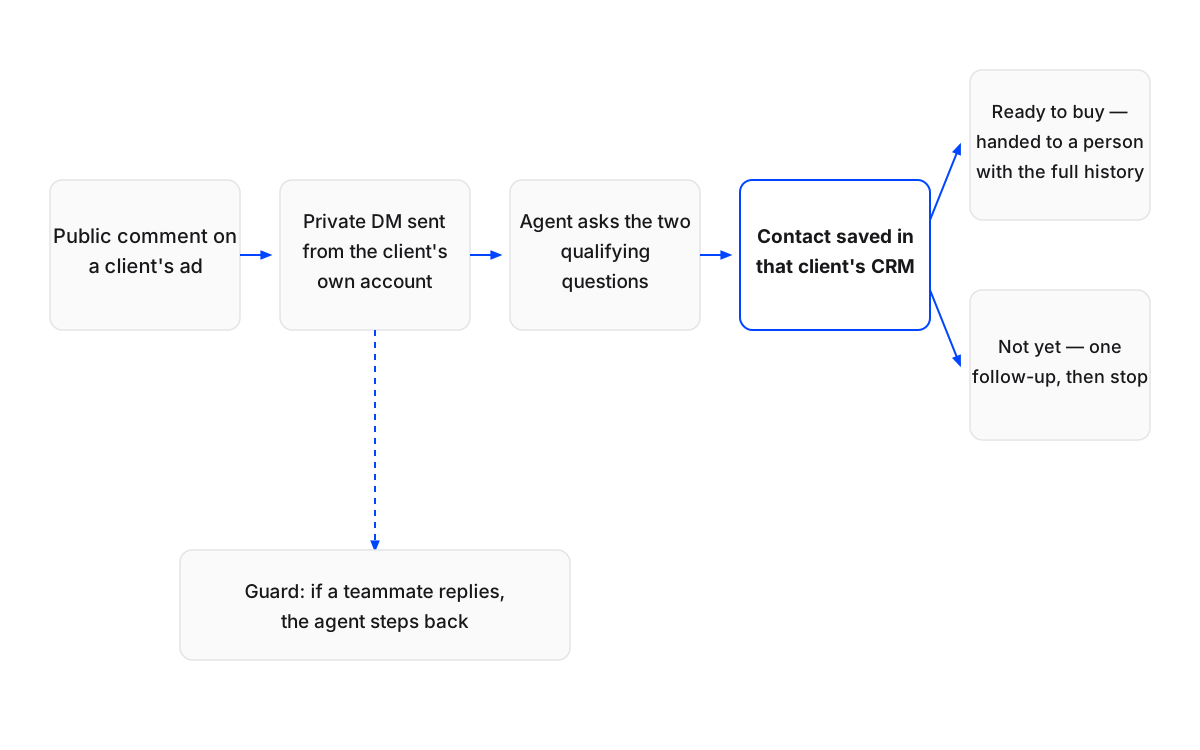
When a conversation needs a person, the agent hands it over with the whole history instead of a summary written from memory. There is a guard against double replies too: when someone on your team answers, the agent steps back, so the customer never gets two answers from two directions.
Before an agent answers a real customer, you can rehearse it on that client’s past conversations and see what it would have said. Fix what is wrong, then let it go live.
Agents reply in the customer’s own language, including Iraqi Arabic and Kurdish (Sorani). For an agency running MENA clients on WhatsApp and Instagram, that is usually the difference between an agent that helps and one the client switches off in week two.
And the limits, plainly. Maxbound has no voice, SMS or Slack agent. Publishing goes to Instagram, Facebook, TikTok and YouTube only, never LinkedIn, X, Threads or Pinterest. If a client’s social plan is built on LinkedIn, Maxbound is the wrong tool and I would rather you hear that before a demo than after one.
Reporting that survives a client’s scrutiny
Client reporting is where a good month gets argued away. A survey summarised by Siddhify puts it sharply: nearly 70% of clients distrust marketing claims, citing inflated or fabricated case studies. The fix is not a nicer deck, it is numbers the client can trace back to a conversation.
Flatline Agency suggests capturing five fields for any result you report: the metric, the baseline, the time window, the measurement source, and any concurrent change that could explain it. Run that against a reply-time number and you can see how much of a standard agency report fails on field two and field four.
Maxbound’s analytics are per client and per channel: reply times, leads, and what people actually asked. Because the lead is saved in the same workspace as the conversation that created it, the measurement source is the platform the client already trusts, not a spreadsheet someone rebuilt on a Friday.
Pricing, side by side
Sendible’s published tiers, from the same summary:
| Plan | Monthly | Workspaces | Profiles |
|---|---|---|---|
| Core | $35 | 1 | 6 |
| Plus | $99 | 3 | 18 |
| Premium | $199 | 7 | 42 |
| Elite | $299 | 15 | 90 |
| Enterprise | $750 | 50 | 300 |
That $199 tier is the one most mid-sized agencies land on: seven workspaces and 42 profiles works out to seven clients at six profiles each. Annual billing takes roughly 15% off the list price.
Maxbound is priced per workspace, with every feature in every workspace, 100 AI credits a month included, and extra credits priced in brackets. The price per workspace falls as an agency adds more, and every account starts with a 7-day free trial. The exact rate depends on how many workspaces you run, so what it costs at your size is a page, not a number I should invent in a blog post.
Worked example, and the figures here are mine for illustration only: an agency with seven clients, six profiles each, sits on Sendible Premium at $199 a month, or seven Maxbound workspaces at whatever your tier works out to. Put the difference next to the hours your team spends on DMs every week and the answer usually stops being about software cost.
Which social media management tool for agencies fits which job
A social media management tool for agencies is not one category. Here is where the options sit, with prices from vendor-published summaries and the honest note that none of these tells you how a tool behaves on a Saturday night DM.
| Tool | Published pricing | Who it suits |
|---|---|---|
| Sendible | $35–$750/mo by workspaces and profiles | Agencies that need to hold many client accounts and publish into them |
| Hootsuite | Standard $99 per user per month, annual, 10 accounts | Teams that accept per-seat pricing for a large, known brand |
| SocialPilot | Essentials $25.50/mo annual, 7 accounts, 1 user, +$5/mo per user | Small teams watching the entry price |
| Planable | $33 Basic, $49 Pro on yearly billing, per workspace, unlimited users | Teams whose main work is reviewing and approving content together |
| Metricool | Free tier for 1 brand | Solo operators testing the water |
| Blotato | $29/mo flat, 20 accounts across 9 platforms | High account count on a low budget |
| Maxbound | Per workspace, AI credits included | Agencies that need the conversation answered and the lead saved inside that client’s own workspace |
The Hootsuite, SocialPilot, Planable, Metricool and Blotato figures come from a Blotato roundup and will change. One detail worth carrying into any trial: SocialPilot charges $5 a month per extra user, so the entry price and the price at five people are two different decisions.
How do I switch from Sendible without losing a client’s history?
Move one client first, keep the old tool warm for two weeks, and let the agent draft while a person approves, so nothing goes out you haven’t read.
How to move one client from Sendible to Maxbound
- Pick one quiet client, not your biggestChoose a client with steady inbound but low risk. If the move goes badly you want a two-week problem, not a contract problem.
- Connect that client's accountsMaxbound is an approved Meta Tech Provider and connects only through each platform's official APIs and OAuth. The client authorises their own accounts through a one-time Magic Link. Nobody types a social password into anything.
- Train the agent on the client's own materialPoint it at the client's website, files, FAQs and past chats. The agent only answers from those sources, so an out-of-date price list is the first thing to fix.
- Rehearse before it answers anyoneRun Simulations on that client's past conversations and read what the agent would have said. Edit where the tone is off.
- Leave approval on for the first weekEvery reply arrives as a draft. Approve or edit for five working days, then decide whether to loosen it. Some agencies never do, and that is a supported way to run it.
What you lose, honestly: scheduled posts sitting in the old calendar do not transfer, so you rebuild the next two weeks by hand. Your team’s muscle memory for the old interface goes too, and that costs a few days of grumbling. Export options are not described in the sources I checked, so confirm what you can pull out before you promise a client their contact history travels cleanly.
A test you can run today
Before you change tools, spend half an hour measuring what the inbox actually costs.
- Open the client with the most comments and count the conversations that arrived after 6pm last month.
- Count how many of those got a reply after 9am the next day.
- Count how many produced a saved contact anywhere.
- Multiply the unanswered ones by your average deal size, then decide whether the gap is worth software.
Here is a brief you can paste into Maxbound, Claude, ChatGPT or Codex and adapt. It is written the way you would brief a new hire:
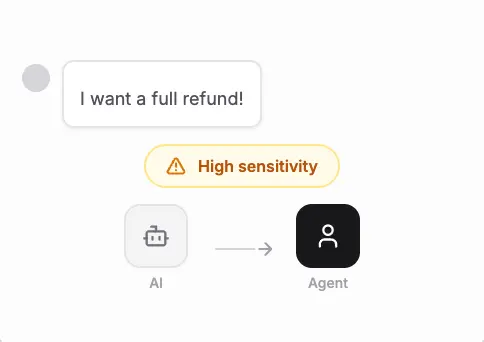
“On [client]‘s Instagram, when someone comments a price on the [offer] ad, DM them the price list and delivery times. Ask whether they want pickup or delivery. Save anyone who answers to the CRM and tag the owner as [name]. If they don’t reply, follow up once, the next day, then stop. Hand over to a person if they mention a complaint, an existing order, or a refund.”
That brief builds the agent, the automation and the follow-up in that client’s workspace, and it waits for your approval before anything runs.
Turning approval off in week one, before anyone has read a draft reply in that client’s voice. Training the agent on the homepage and not the FAQ page or the price list, then wondering why it hedges. And letting your team and the agent work the same inbox without knowing the agent steps back when a person replies.
When not to do any of this: the client gets almost no inbound, the client will not hand over the source material the agent needs, or the social plan depends on LinkedIn publishing. In those cases you are buying a fix for something that isn’t broken.
Who each one is for
Sendible suits the agency whose bottleneck is approved content going out on schedule across many client accounts, at a price that scales with profiles rather than people.
Maxbound suits the agency whose bottleneck is the conversation after the post: comments and DMs that need an answer in the customer’s language, a qualification, and a saved lead inside that client’s own workspace, with a person approving until the agency decides otherwise.
If you run both halves and the inbox is where money leaks, start there and leave the calendar alone for a quarter.